Coffee Shop vs Home Espresso Cost: Is Making Lattes at Home Worth It?
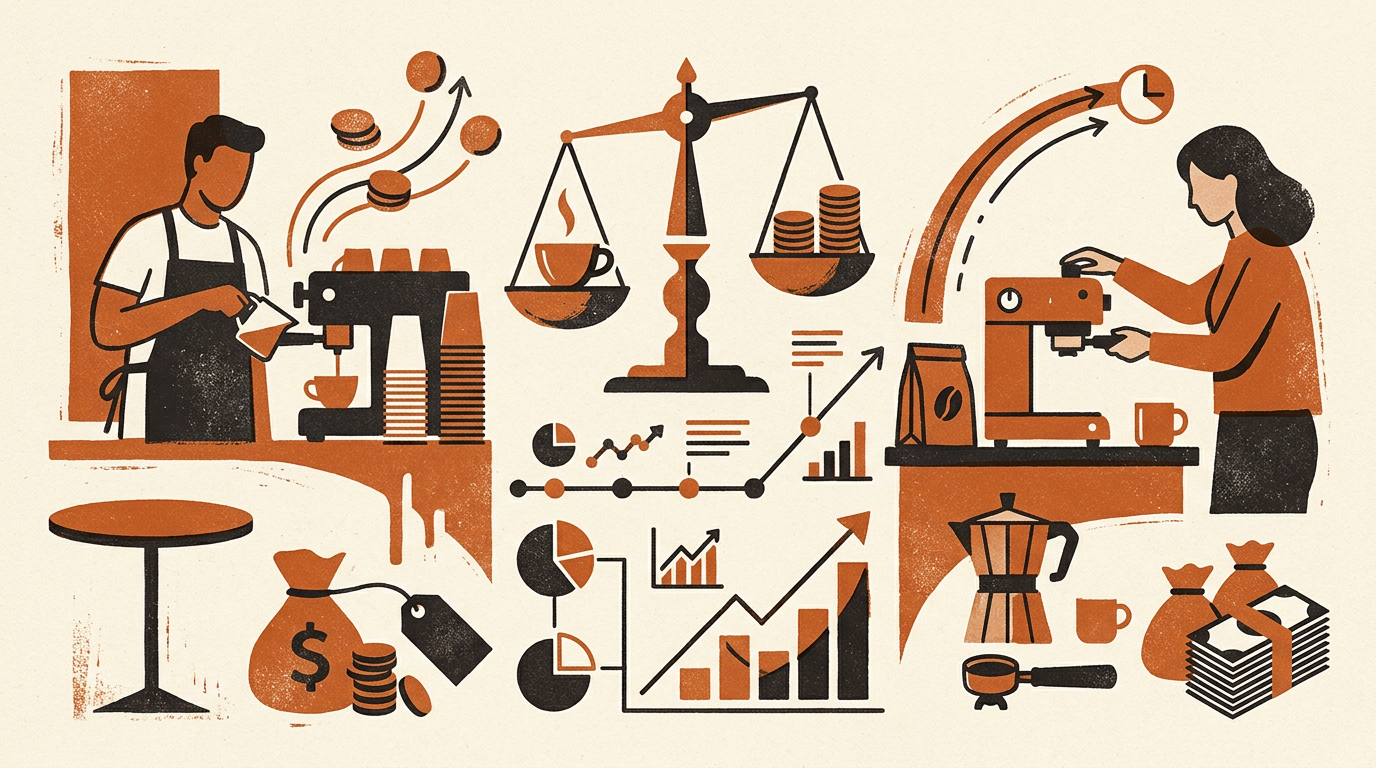
Want your own numbers first? Plug your daily drinks and drink price into our espresso cost calculator, then come back for the full breakdown below.
If your morning routine involves a $5.50 milk drink from a neighborhood cafe, you are not alone. What feels like a reasonable daily indulgence compounds into thousands of dollars a year. When you compare the coffee shop vs home espresso cost side by side, the gap is large enough that the equipment question stops being "can I afford a machine?" and becomes "how many months until it pays for itself?"
What a cafe drink actually costs per year
At $5.50 per drink, one latte each weekday runs about $1,430 a year. Two drinks a weekday — or a two-person household — doubles that to roughly $2,860. Add a tip or a size upgrade and the real number climbs higher. None of this includes the drive, the wait, or the days the shop is closed.
What the same drink costs at home
A home latte has three real inputs: beans, milk, and a little electricity and water. A double shot uses about 18 grams of coffee. At typical specialty-bean prices, that is roughly $0.80–$1.00 per drink. Milk adds about $0.25–$0.35. All-in, most home milk drinks land between $1.10 and $1.50 each — we use $1.35 as the working average below.
The one honest caveat: the beans matter as much as the machine. Freshly roasted, espresso-suited beans are what close the gap between "homemade" and "better than the cafe." That is the whole reason we roast and ship our own — you can see the lineup on our coffee page.
The side-by-side math
| Habit | Cafe cost/yr | Home cost/yr | Annual savings |
|---|---|---|---|
| 1 per weekday | $1,430 | $351 | $1,079 |
| 2 per weekday | $2,860 | $702 | $2,158 |
| 1 daily (7 days/wk) | $2,007 | $493 | $1,514 |
| 2 daily (couple) | $4,015 | $986 | $3,029 |
Assumes $5.50 per cafe drink and $1.35 per home drink. Run your own prices on the calculator — even small changes shift the totals a lot.
How fast does the equipment pay for itself?
A sensible starter setup — machine plus grinder plus the small accessories — runs roughly $400–$600. For a one-drink-per-weekday household saving about $1,079 a year, that is a payback period of around five to seven months. A couple drinking two home lattes a day can pay the same setup back in under three months. After that, every drink is close to pure savings.
If you are not sure which machine tier fits your household, our guide to choosing an espresso machine under $500 walks through the four types without the hype, and the homepage calculator pairs each budget with a tier.
When the coffee shop still makes sense
Home espresso is not the right answer for everyone, and pretending otherwise would make the math less trustworthy. The shop still wins if you drink coffee out mainly for the social ritual, if you have one drink a week or fewer, or if counter space and a morning learning curve genuinely do not fit your life. The crossover point where home clearly wins is roughly one drink per weekday — below that, the equipment takes years to pay back.
The bottom line
For a daily coffee-shop drinker, moving to home espresso typically saves between $1,000 and $3,000 a year depending on household size, with the equipment paying for itself in the first few months. The quality ceiling at home is also higher than most people expect — fresh beans and a little practice beat a rushed barista more often than not.
Ready to run your own numbers? Start with the cost calculator, then browse our fresh-roasted espresso beans — roasted days before they ship, which is where a home shot really earns its keep. Questions about matching a setup to your kitchen? Get in touch.
Second Pour sells its own coffee and earns commissions on some machine recommendations. Prices in this article are illustrative averages, not quotes for any specific cafe or product.